
Gonzales County DUI Records
Gonzales County DWI and DUI records are maintained by the District Clerk and County Clerk in Gonzales, Texas. The county is located in the South Central Texas region between San Antonio and Houston. If you need to look up a DWI case, check an arrest record, or find court filing details for someone charged with drunk driving in Gonzales County, this page walks you through the right offices and state resources to use.
Gonzales County Overview
Gonzales County District Clerk
The Gonzales County District Clerk is the custodian of felony DWI records for the county. The 25th District Court handles felony criminal cases in Gonzales County, which includes DWI third offense and above, intoxication assault, and intoxication manslaughter as defined under Texas Penal Code Chapter 49. A third DWI is prosecuted as a third-degree felony. Intoxication manslaughter, where a DWI results in the death of another person, is a second-degree felony.
The clerk's office in Gonzales handles in-person and mail record requests. Document copies are $1.00 per page. If you need a certified copy, add a $5.00 certification fee per document. Bring the defendant's full legal name and date of birth, or a case number if you have one. Felony criminal records are retained permanently under Texas retention rules. Attorneys e-file through the state system accessible at txcourts.gov.
| Office | Gonzales County District Clerk |
|---|---|
| Address | 414 St. Lawrence Street, Gonzales, TX 78629 |
| Hours | Monday through Friday, 8:00 AM to 5:00 PM |
Gonzales County Clerk - Misdemeanor DWI Records
Misdemeanor DWI records in Gonzales County are kept by the County Clerk. A first-time DWI with no aggravating factors is a Class B misdemeanor under Penal Code Section 49.04. If the driver tested at 0.15 BAC or higher, the charge is elevated to a Class A misdemeanor under the same code section. A second DWI conviction also carries a Class A misdemeanor classification, with a mandatory minimum of 30 days in jail.
The County Clerk maintains case records including the initial charge, pleas entered, hearing schedules, and final disposition. Records may also include bond conditions such as ignition interlock device requirements, which are common for repeat DWI offenders. Services are provided in person at the courthouse. Standard copy fees apply at the same rates as the district court records.
State-level records held by Texas DPS Crime Records can provide conviction history data that supplements what is available through the local Gonzales County clerk offices.
| Office | Gonzales County Clerk |
|---|---|
| Address | 414 St. Lawrence Street, Gonzales, TX 78629 |
Texas DWI Law and Gonzales County Cases
Gonzales County prosecutes DWI cases under the same Texas law that applies statewide. Penal Code Section 49.04 defines driving while intoxicated as operating a motor vehicle in a public place while intoxicated. Intoxication is defined as a blood or breath alcohol concentration of 0.08 or above, or having lost the normal use of mental or physical faculties due to alcohol, a controlled substance, a drug, or a combination.
The charge level in a Gonzales County DWI case depends heavily on the driver's history and the facts of the incident. A first offense with BAC below 0.15 is a Class B misdemeanor. A first offense at 0.15 or above, or any second offense, is a Class A. A third or subsequent DWI is a third-degree felony. DWI with a child under 15 in the vehicle under Section 49.045 is a state jail felony. These distinctions affect where the case is filed and how the records are maintained.
If a DWI arrest in Gonzales County involved a traffic crash, the peace officer crash report (CR-3) is maintained by Texas Department of Transportation. These reports can be ordered through TxDOT's CRIS Request system for $6 standard or $8 certified. TxDOT holds crash records for 10 years.
License Suspension Following a DWI Arrest
A DWI arrest in Gonzales County starts an administrative license revocation process separate from any criminal court proceedings. Texas DPS runs this process. The officer takes the physical license at the time of arrest and issues a 40-day temporary permit. The driver must request an ALR hearing within 15 days or the suspension is automatic.
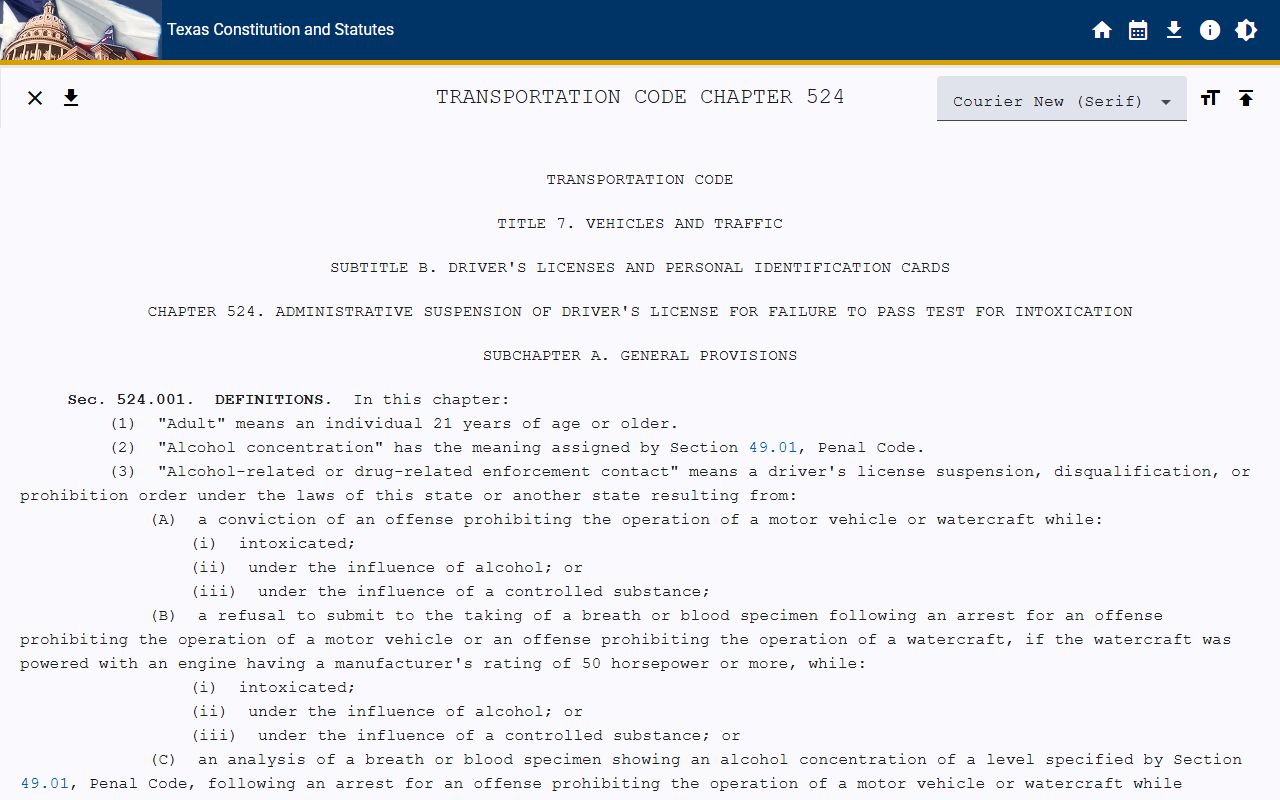
First-offense suspension periods under Transportation Code Chapter 524 are 90 days for a test failure and 180 days for a refusal. Prior ALR suspensions within 10 years double both of those periods. The civil ALR process operates completely independently of the criminal DWI case. A dismissal in criminal court does not automatically cancel the ALR suspension. After the suspension ends, a $125 reinstatement fee is paid to DPS before a new license is issued.
Driver records showing suspension history and reinstatement can be ordered through dps.texas.gov. The cost ranges from $4 to $22 depending on the record type. The Type 3A certified complete history is the version most often used for legal or court matters.
Note: The ALR hearing is held before the State Office of Administrative Hearings, not the local criminal court. The outcome of an ALR hearing does not bind the criminal case judge.
Additional Resources for Gonzales County DWI Records
Texas DPS accepts public information requests for records it maintains, including certain conviction-level data. Submit requests through the DPS public information portal. The Texas Public Information Act generally requires agencies to respond within 10 business days.
Impaired driving statistics for Gonzales County and surrounding areas are compiled by Texas DOT based on crash report data. This information is part of TxDOT's broader road safety reporting. For alcohol-related cases involving minors, the Texas Alcoholic Beverage Commission handles enforcement under Alcoholic Beverage Code Chapter 106. Minor in Possession, Minor in Consumption, and related violations may appear alongside DWI charges in county court records when young drivers are involved.
Nearby Counties
Gonzales County is located in South Central Texas. DWI cases in neighboring counties are handled by their own separate court systems.