
DWI Records in Cherokee County, Texas
Cherokee County DUI and DWI records are on file at the courthouse in Rusk, Texas. The District Clerk and County Clerk offices handle criminal case records for felony and misdemeanor DWI cases respectively. Cherokee County is in East Texas and its courts serve all cities and unincorporated areas in the county. This page covers where those records are, how to get them, and what Texas law says about DWI charges.
Cherokee County Overview
Cherokee County Clerk Offices
The Cherokee County Courthouse in Rusk is the hub for all county court records. The District Clerk maintains felony DWI records for cases heard in the 2nd Judicial District Court, including DWI third offense, intoxication assault, and intoxication manslaughter. Contact the District Clerk at (903) 683-2350.
The County Clerk at (903) 683-2225 holds all misdemeanor DWI records. First and second offense DWI cases are Class B and Class A misdemeanors handled by the County Court at Law. Both offices operate Monday through Friday at 135 S. Main Street in Rusk. Staff can search by name or case number and provide copies of case records.
| Address | 135 S. Main Street, Rusk, TX 75785 |
|---|---|
| District Clerk Phone | (903) 683-2350 |
| County Clerk Phone | (903) 683-2225 |
| Hours | Monday through Friday, 8:00 AM to 5:00 PM |
Note: Copy fees are $1.00 per page standard and $5.00 per document for certified copies.
Finding DUI Records in Cherokee County
To find DWI records in Cherokee County, visit the Rusk courthouse or send a written request by mail. The county has limited online access, so in-person requests give you access to the most complete case files. You need the subject's full name or a case number. Bring a photo ID when visiting the courthouse.
The statewide Texas Courts website may provide some general case lookup. Driving records linked to DWI suspensions are available through Texas DPS driver records. Mail requests should include the subject's name, approximate case year, your address, and payment for fees.
Texas DWI Laws and Cherokee County
Texas law in Penal Code Chapter 49 governs DWI across all counties. A first DWI is a Class B misdemeanor with 3-180 days in jail and up to $2,000 fine. A BAC of 0.15 or higher makes it a Class A misdemeanor with up to one year in jail. A second DWI requires at least 30 days in jail. A third is a third-degree felony with 2-10 years in prison handled by the 2nd District Court in Rusk.
Driving with a child under 15 while intoxicated is a state jail felony. The TxDOT impaired driving page notes annual state surcharges of $3,000 to $6,000 apply after conviction. Intoxication assault is a third-degree felony and intoxication manslaughter is a second-degree felony under Section 49.07 and 49.08.
State DPS Records and Cherokee County
The Texas DPS Crime Records Division collects DWI arrest and conviction data from Cherokee County law enforcement agencies including the county sheriff and city police departments.
Cherokee County Sheriff's arrest data is submitted to DPS and incorporated into the statewide criminal history database accessible to courts and authorized agencies.
License Suspension After a DWI Arrest
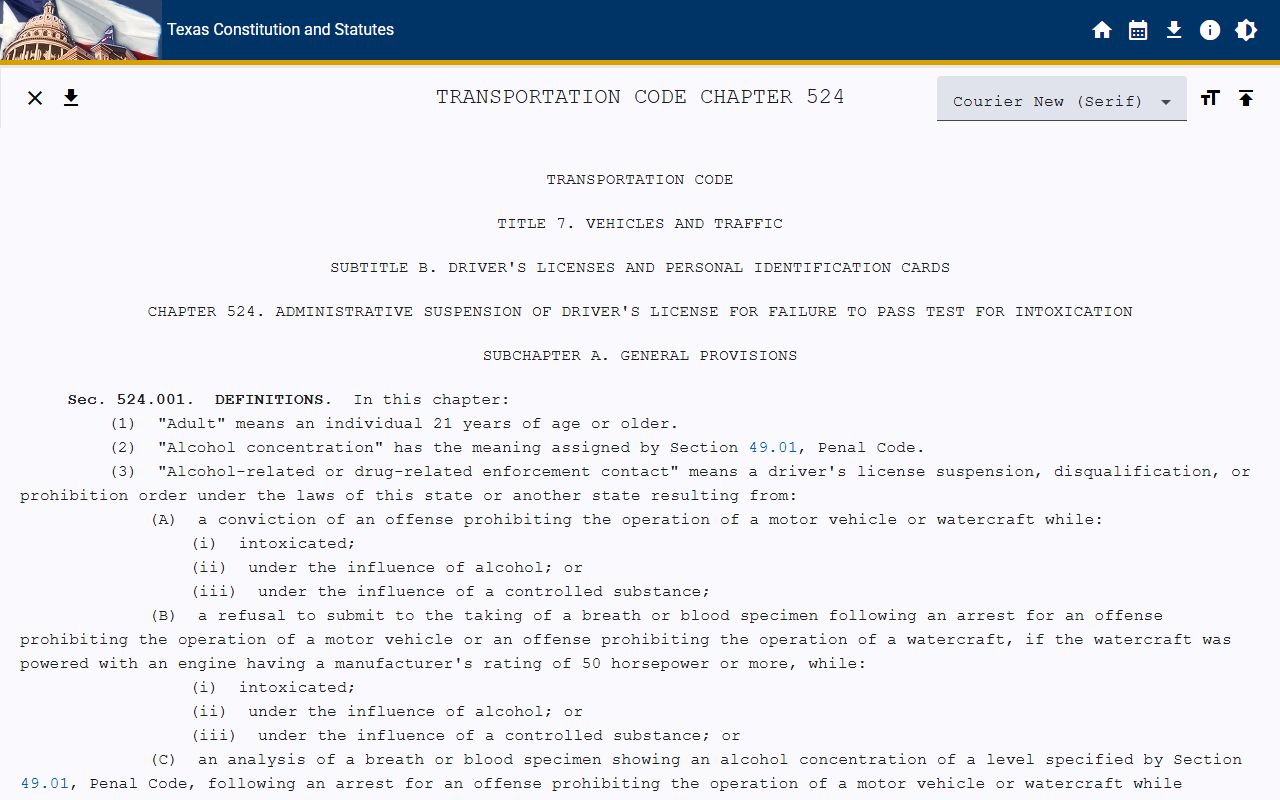
A DWI arrest in Cherokee County triggers the ALR process. The officer takes the license and gives a 40-day temporary permit. The driver has 15 days to request a hearing under Transportation Code Chapter 524. Refusing to test brings a 180-day suspension. Failing at 0.08 brings a 90-day suspension for a first offense. Zero tolerance applies to minors under Alcoholic Beverage Code Section 106.041. Pay the $125 reinstatement fee to Texas DPS after the suspension ends.
Resources for Cherokee County
Contact the State Bar of Texas at (800) 252-9690 or visit texasbar.com for DWI attorney referrals. Crash reports are available through TxDOT. The DPS Public Information Center handles state records requests. The Texas Alcoholic Beverage Commission handles alcohol licensing and enforcement for Cherokee County.
Nearby Counties
Cherokee County is in East Texas. These bordering counties each have their own court systems for DWI cases.